
VPI Coil Construction
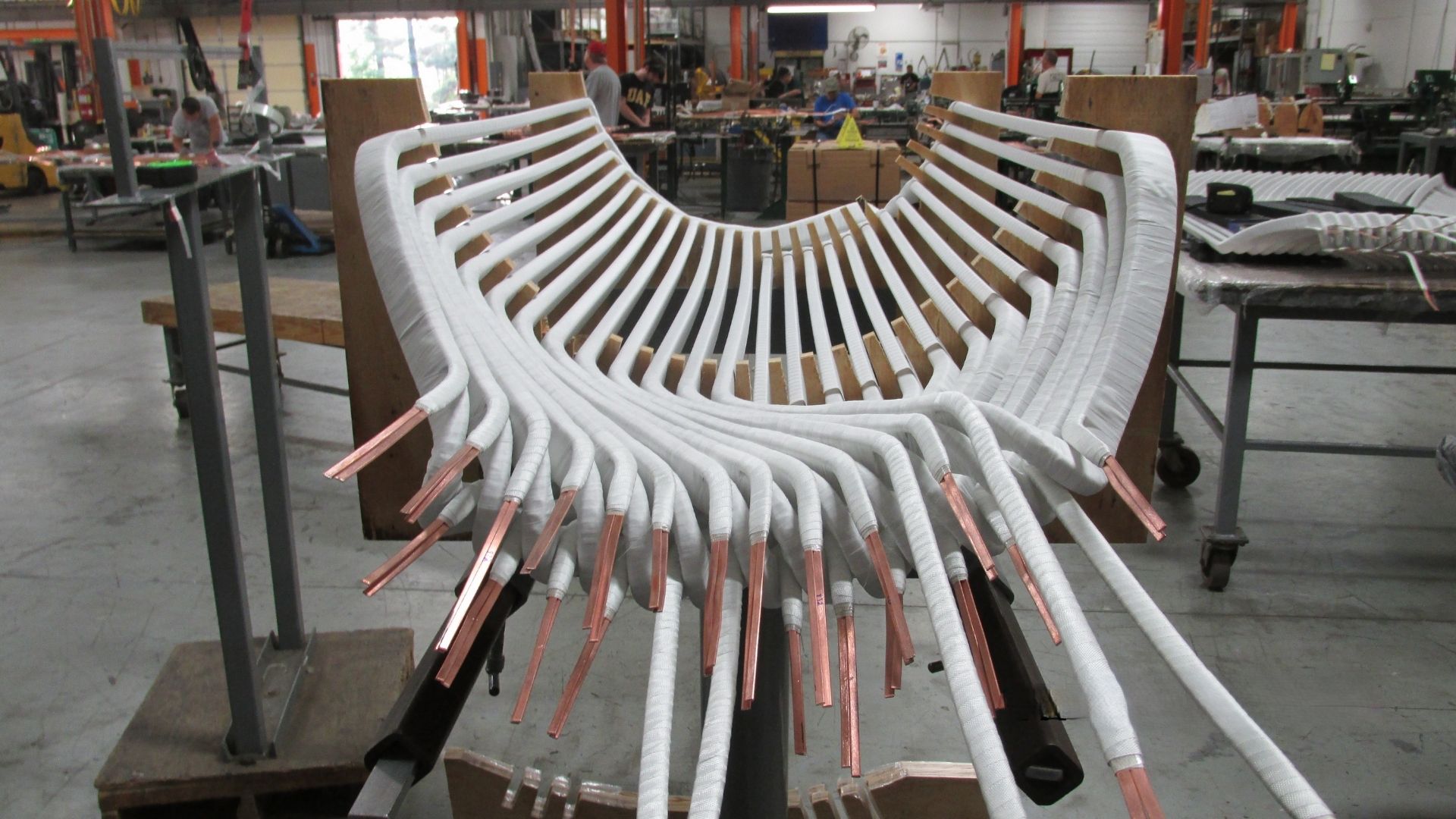
Vacuum Pressure Impregnation (VPI) insulation is recommended for motors that require sealing protection against severe-duty contaminants.
CMI's VPI insulation system provides long-term motor protection for severe applications by resisting vibration, moisture, and other contaminants.
Additionally, they provide excellent heat transfer and a cooler-running motor.
The CMI VPI Coil Construction Process
Turn-and-strand insulation is selected to ensure each insulation system design provides maximum motor uptime. Coils are wound with rectangular copper conductors insulated with a minimum of Quad enamel coating, whenever possible. Some applications may require the use of single or double glass over film combinations or mica turn-taped construction.
Conductors are pressure-bonded and sized to align the turns, providing a highly flexible yet mechanically stable coil loop. The coils are then shaped to precise dimensions in a coil spreader. The VPI coil leads are then insulated with VPI sleeving or tape, depending on the application required.
Coil ground insulation consists entirely of VPI micamat tapes or a combination of tapes and slot wrappers, followed by a Dacron glass or glass armor tape. Tapes and wrappers are composites of mica paper, polyester mat, and glass cloth, ensuring excellent absorption of VPI resins. Polyester felt lead seals are always installed at the point where the leads exit the coil. Multiple layers of these tapes and wrappers are used depending on voltage, motor application, or specific customer requirements. After the coils are insulated, they are left untreated to allow the resin to penetrate and fill the insulation system during the VPI process.
Slot portions of coils rated 6,600 volts and above are taped with semiconducting tape. Each coil is then surge tested at values well above IEEE standards. Because VPI-type mica tapes are used, reduced hi-pot testing should be performed.